It would be easy to lament the passing of “Old Key West”, whatever that means to whoever happens to be saying it. I made my first visit in 1994, and like many things in life, the island has both changed and stayed the same over the last thirty-two years.
Key West still conjures images of a laid-back, come-as-you-are, be-who-you-will-be lifestyle, but the island has undeniably grown busier. Sun-bleached, ramshackle cottages still line many streets, but now coexist with gated resorts and luxury rentals that command thousands of dollars a night. The beach bars where an unknown troubadour named Jimmy Buffett once played for crowds of dozens are now tourist attractions drawing thousands who disgorge themselves daily from cruise ships at the docks. And two-and-a-half years after Jimmy’s passing, his Coral Reefer Band packed an island amphitheater to keep the party going. It’s an ever-changing, always-different place, but could it really be any other way?
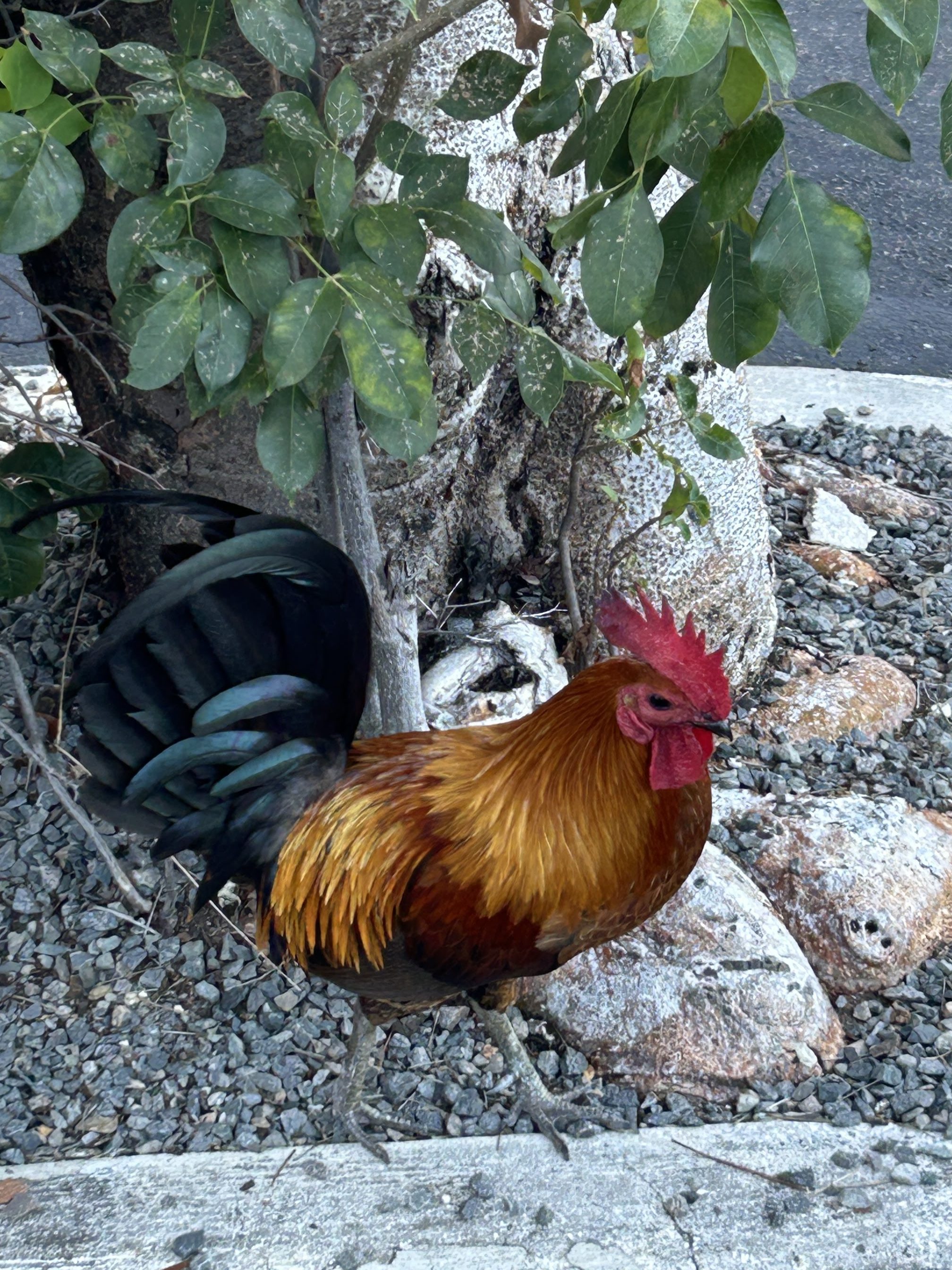
One undeniable change over the last few decades is that the entire island now crows every morning. That is not an exaggeration. Roosters announce the day from every corner of Key West. If you’re the type who prefers a quiet sunrise at Higgs Beach over the crowd of revelers at sunset in Mallory Square, you will hear the island come alive at dawn. It’s a symphony for morning people and pure torture for those just rolling in from Duval Street.
The thousands of feral chickens roaming Key West all seem the same at first – until you realize they aren’t. They have distinct markings and very distinct personalities. Some are timid, some careless, and some are such bold beggars that you start to wonder how the word chicken ever became associated with fear. All alike, yet all different. Just like people.
It’s said the chickens became feral and multiplied after cockfighting was outlawed in Florida in 1986. Their numbers grew even more after Hurricane Georges scattered them across the island in 1998. Since then, they’ve become part of 21st-century Key West culture. Chickens appear in photos, paintings, and sculptures throughout restaurants, vacation rentals, and gift shops. And as a twelve-year-old boy trapped in a much older body, I find the ubiquitous “cock” and “pecker” references endlessly amusing, while Chrissy rolls her eyes.
“Old Key West” wasn’t about chickens. But love them or hate them, they’re here today. They represent just one change of the last few decades. What changes will the next thirty-two years bring? The island won’t return to what it once was, but it won’t stay as it is either. Nothing is permanent. Everything changes. I won’t mourn for “Old Key West.” I’ll enjoy it today, and wait to see what comes next.
 Where Are We Going Now?